Your salt system says COLD, or low salt, and the chlorine reading keeps dropping. Most of the time, nothing is broken.
Every year around Thanksgiving, we get the same call. A saltwater pool that ran fine all summer suddenly isn't making chlorine. The owner assumes the cell is dead and starts pricing a new one.
Usually it's just the water temperature. Here's what's going on, what to do until spring, and how to tell when it really is a problem.
Why Does a Salt Cell Stop Working in Cold Water?
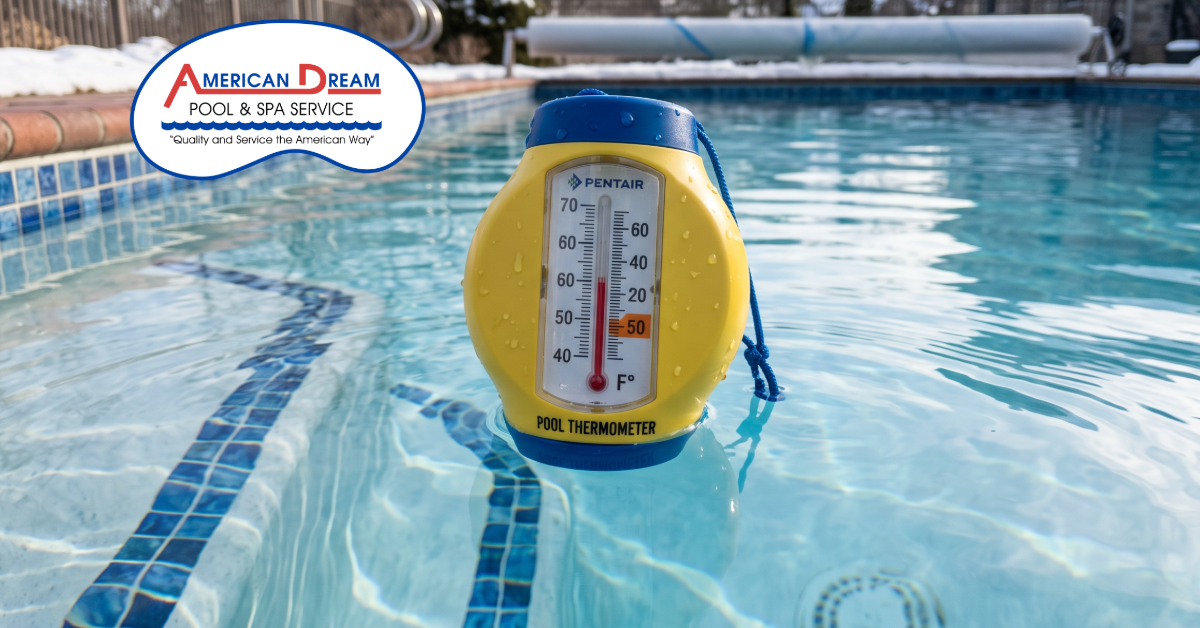
Salt systems are built to slow down and then shut off as the water cools. Hayward's AquaRite cuts output to 20 percent or less at 60 degrees and stops making chlorine at 50, with the display reading COLD. Pentair's IntelliChlor shuts off at about 52 degrees, give or take three, and Pentair says the feature extends the life of the cell.
Other brands work the same way, with slightly different cutoffs. It's a feature that protects the cell, not a fault.
When Does This Happen in Placer County?
Sooner than most people expect. By Thanksgiving, most unheated pools on the valley floor are already in the 50s, and through December and January a lot of them sit right around the shutoff point or below it. Our post on how cold pools get in November walks through the numbers.
Pools in the foothills get there first. Properties in Penryn and Loomis see colder nights earlier than the valley, and a pool shaded by oaks loses what little winter sun it gets. In Granite Bay, two pools on the same street can hit the cutoff weeks apart depending on the trees.
If you heat the pool and keep the water above about 60 degrees, the cell keeps working normally.
Does a Saltwater Pool Still Need Chlorine in Winter?
Yes. Cold water slows algae and bacteria, so the pool needs less chlorine than it does in July. It still needs some.
This winter makes that more important. Storm season brings leaves, dirt, and runoff into the water, and all of it uses up chlorine. Our post on protecting your pool from El Niño storms covers the equipment side. On the water side, a pool with no chlorine and a load of storm debris can turn green during the coldest month of the year.
So when the cell shuts off, test the water every week and add chlorine by hand to keep it in range. Our post on how water temperature affects pool chemistry explains why the right dose changes as the water cools.
Liquid Chlorine or Tablets?
For most salt pools, liquid chlorine is the better choice in winter.
Chlorine tablets add stabilizer, also called cyanuric acid, every time they dissolve. A few months of tablets all winter can push stabilizer high enough that your chlorine stops working well next summer, and the only real fix is draining part of the pool. We covered that in why your chlorine isn't working anymore. Liquid chlorine doesn't add stabilizer, so it leaves nothing behind for spring.
If keeping up with it every week sounds like a chore, it's part of what our weekly pool service handles in winter.
Should You Add Salt When It Says Low Salt?
Not until you check it another way.
Some systems read salt lower in cold water, even though the salt is still in the pool. Adding more on a false reading can push the level too high, and you'll find out in spring when the water warms up.
Rain is the exception. Heavy storms really do dilute salt. Our post on what the first fall rain does to your pool explains how. After a wet stretch, test with a separate salt test strip or meter before you add a bag.
A low-salt warning can also mean scale on the cell plates, which we covered in what your salt cell is trying to tell you.
Is Winter a Good Time to Service Your Salt Cell?
It's the best time. The cell isn't working anyway, so having it out for a cleaning or an inspection costs you nothing.
In Lincoln, Rocklin, and Roseville, hard municipal water leaves calcium scale on the plates over a long summer. Winter is a good time to see how much built up.
In Sheridan, Loomis, and Penryn, where many homes are on wells, metals in the fill water can coat the plates too.
If the cell is near the end of its life, replacing it now gets the job done before the spring rush and has it ready for the first warm week. A new cell is a pool repair worth planning instead of rushing.
When Is It Actually a Problem?
The cold explains a lot, but not everything. Call if:
The cell shows an error or won't make chlorine when the water is above 60 degrees
A separate test shows your salt is in range, but the system still says low salt in warm water
The cell doesn't start working again once spring warms the water
You see heavy white crust on the plates, or the cell is several seasons old
The water turns green or cloudy even though you've been adding chlorine
Quick Answers
Why does my salt cell stop making chlorine in winter? Most salt systems slow down as the water drops toward 60 degrees and shut off completely somewhere around 50 to 55 degrees, depending on the brand. It's a built-in feature that protects the cell, not a breakdown.
Do saltwater pools need chlorine in winter? Yes. Chlorine demand drops in cold water, but it doesn't go away. When the cell shuts off, add liquid chlorine to keep the level in range until the water warms up.
Should I add salt when my system says low salt in winter? Not until you confirm it with a separate salt test. Some systems read salt lower in cold water, but heavy rain can also dilute it for real, so test before you add.
Can I use chlorine tablets in a saltwater pool in winter? You can, but liquid chlorine is usually the better choice. Tablets add stabilizer every time you use them, and that stabilizer stays in the water into next summer.
When will my salt cell start working again? When the water warms back above its shutoff point in spring. Most cells return to full output once the water is above about 60 degrees.
For more answers about our service, see our pool and spa service FAQ.
Keeping Salt Pools Clean Through Winter
American Dream Pool & Spa Service is based in Lincoln. We provide weekly pool service and spa service, along with pool repairs and spa repairs, for homeowners in Lincoln, Rocklin, Roseville, Granite Bay, Loomis, Penryn, and Sheridan.
If your salt system has gone quiet and you're not sure whether it's the cold or the cell, call or text us at (916) 975-7370, or reach us here.