What the First Fall Rain Does to Your Pool
Most years, the first real rain of fall is a relief around here. The dust settles, the air clears, and the yard finally gets a drink. Your pool sees it differently. That first storm washes five months of dry-season buildup straight into your water, and it usually happens overnight.
We've gone since spring with almost no rain across Lincoln, Rocklin, Roseville, and the rest of Placer County. That means everything that settled on your roof, deck, patio furniture, and landscaping since May is still sitting there. When the first storm comes through, a lot of it ends up in the pool. Here's what that does to your water, and what you can do now so it doesn't catch you off guard.
Why the First Rain Hits Harder Than the Rest
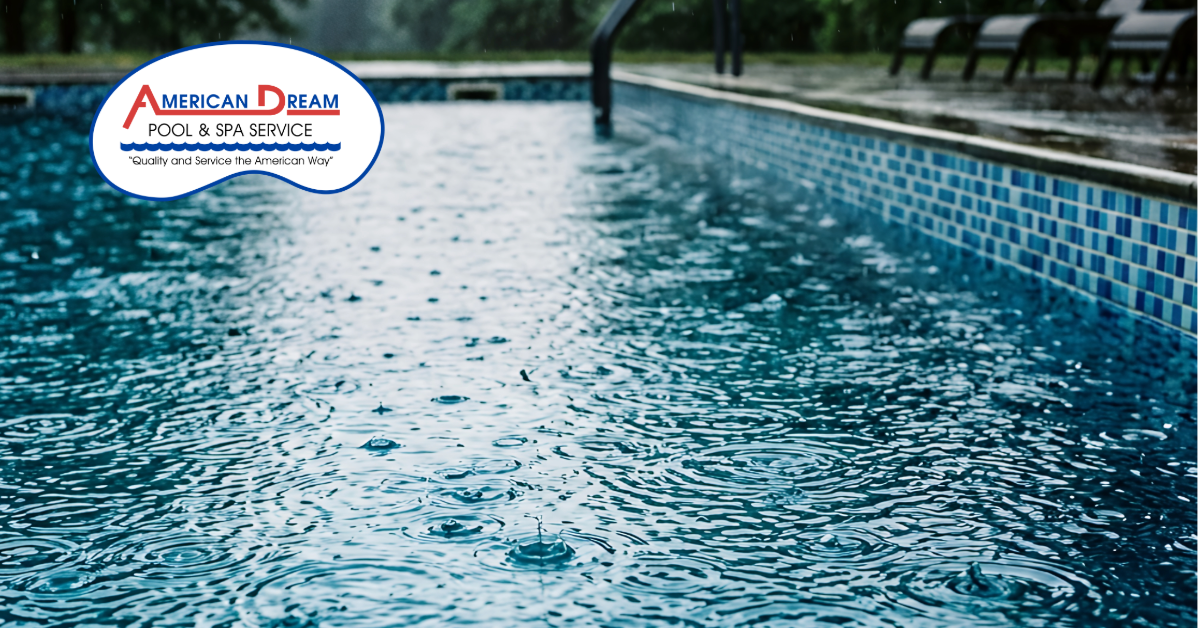
A rainstorm in January isn't a big deal for most pools. By then, the roof and deck have been rinsed a dozen times. The first rain of fall is different because it's carrying the whole summer with it.
That includes dust, pollen, dried leaves, bird droppings, grass clippings, and fertilizer from the lawn and planters. If we had smoke or ash from fire season, some of that is still sitting on rooftops and in gutters too. All of it washes off hard surfaces and runs toward the lowest point, which in a lot of backyards is the pool.
This is organic material, and a lot of it contains phosphates and nitrates. Those are food for algae. So the first rain does two things at once. It adds a load of contaminants your chlorine has to deal with, and it feeds anything that survives.
What Rain Does to Your Water Chemistry
Rainwater itself is slightly acidic and has almost no buffering. When a decent storm adds an inch or two to your pool, a few things shift.
Your pH drops. Your total alkalinity drops with it, which makes the pH less stable for the next several days. Your chlorine gets diluted and then gets used up quickly trying to handle everything that washed in. If you have a salt pool, your salt level drops too, and the salt cell produces less chlorine right when you need more.
None of this is dramatic on its own. The problem is timing. Fall afternoons in Placer County are often still warm and sunny after a storm clears. Warm water, low chlorine, and a fresh supply of phosphates is exactly the setup for an algae bloom. If you've dealt with algae that keeps coming back, this is often how it starts.
Low pH also matters for your equipment. Water that stays acidic for too long is hard on heater heat exchangers, pump seals, and plaster. With heater season starting, that's worth paying attention to. We covered what to check on your heater in our post on getting it ready before you need it.
What to Do Before the First Storm
A little prep now makes the cleanup much easier.
Clean your gutters, especially any that drain toward the pool. A clogged gutter that overflows onto the deck sends a concentrated stream of roof debris right into the water.
Get your chemistry into good shape ahead of time. Keep chlorine toward the upper end of its normal range and make sure alkalinity is where it should be. A pool that goes into a storm balanced handles the storm much better than one that was already running low.
Empty the skimmer and pump baskets and check your filter pressure. Your filter is going to take a hit. If the pressure is already climbing, clean or backwash your filter before the rain instead of after.
Put the cover on if you have one. Even a basic solar cover keeps a lot of debris out. If you've been going back and forth on whether a cover is worth it, here's our take.
Look at your equipment pad. Make sure water drains away from the pump and electrical, not toward it. If your breaker has been tripping in wet weather before, get that checked out now through our pool repair team rather than in the middle of a storm.
What to Do After It Rains
Once the storm passes, the order matters.
Get the debris out first. Skim the surface, empty the baskets, and brush the walls and floor. Adding chemicals to a pool full of leaves just burns through them faster.
Keep the pump running. This is not the week to cut back your run time. Circulation is what gets the debris to the filter and the chlorine to every corner of the pool. If you've already shortened your schedule for fall, bump it back up for a few days.
Test the water the next day, not just the day of. Alkalinity and pH can keep drifting for a day or two after a storm. Adjust alkalinity first, then pH, then chlorine.
Check the water level. A heavy storm can raise the water above the middle of the skimmer opening, which keeps the skimmer from pulling debris off the surface. If that happens, lower it a bit.
Check your filter pressure again. The first storm often loads a filter more than a month of normal use.
Well Water Cities and Larger Lots
If you're in Loomis, Penryn, or Sheridan, the first rain tends to hit a little differently.
Larger properties usually mean more open ground, more trees, and more dirt that can wash toward the pool. Rural dust has been building up all summer, and oak leaves start dropping right around the time the rain comes. Expect a heavier debris load and cloudier water than a pool in a tighter subdivision.
If you lower your water after a storm and then top it back up from a well, keep in mind that well water brings its own minerals, and the amount can vary. That can make post-storm balancing less predictable. Testing a day after any refill is a good habit.
Municipal Water Cities
In Lincoln, Rocklin, Roseville, and Granite Bay, the bigger concern is what happens after the pH drops.
Once alkalinity has been knocked down by rain, pH can swing back up faster than usual over the following week. With the harder water most of these areas have, a pH that climbs too high brings calcium scaling back into the picture on tile, surfaces, and inside equipment. Granite Bay pools with mature trees overhead also tend to see heavy leaf and needle drop at the same time, which adds to the organic load.
The fix is the same. Rebalance alkalinity after the storm, then keep an eye on pH for the next several days instead of assuming one adjustment took care of it.
Don't Forget the Spa
A covered spa is mostly protected from direct rain, but not from everything. Runoff from the deck can still find its way in, and a cover that sits in the rain can get waterlogged, heavy, and harder to seal. If your spa cover is already older, the first few storms are usually when that becomes obvious.
Spa use also picks up once the weather turns, so this is a good time to make sure the water, heater, and jets are ready for it. Our spa service and spa repair teams can handle both.
Getting Ahead of It
The first fall rain doesn't have to mean a green pool the following weekend. Most of the problems come from going into the storm with low chlorine and full baskets, then waiting too long to rebalance afterward.
If you'd rather not keep an eye on the forecast, that's what our weekly pool service is for. We serve Lincoln, Rocklin, Roseville, Granite Bay, Loomis, Penryn, and Sheridan, and we adjust for the weather as it changes through the season. For a bigger look at everything that shifts this time of year, see what to do when summer ends and the top things that can go wrong with your pool this fall.
If your pool is already struggling after a storm, or you want it in good shape before one hits, reach out to us here and we'll get you on the schedule.