Your test strip says the pool is fine. The pool store says you need a cart full of chemicals. One of them is wrong, and sometimes it's both.
This is one of the most common questions we hear from pool owners, and it's a fair one. Nobody wants to pour money into a pool that doesn't need it, and nobody wants to skip a treatment that does. Mismatched readings almost always come down to a short list of reasons, and most of them are easy to fix.
September is a good time to sort this out. Your test supplies just sat through a full Placer County summer, and your pool's chemistry is about to shift as the water cools. The adjustments we recommend when summer ends only work if the numbers you start with are real.
Your Test Kit Probably Spent the Summer Somewhere Hot
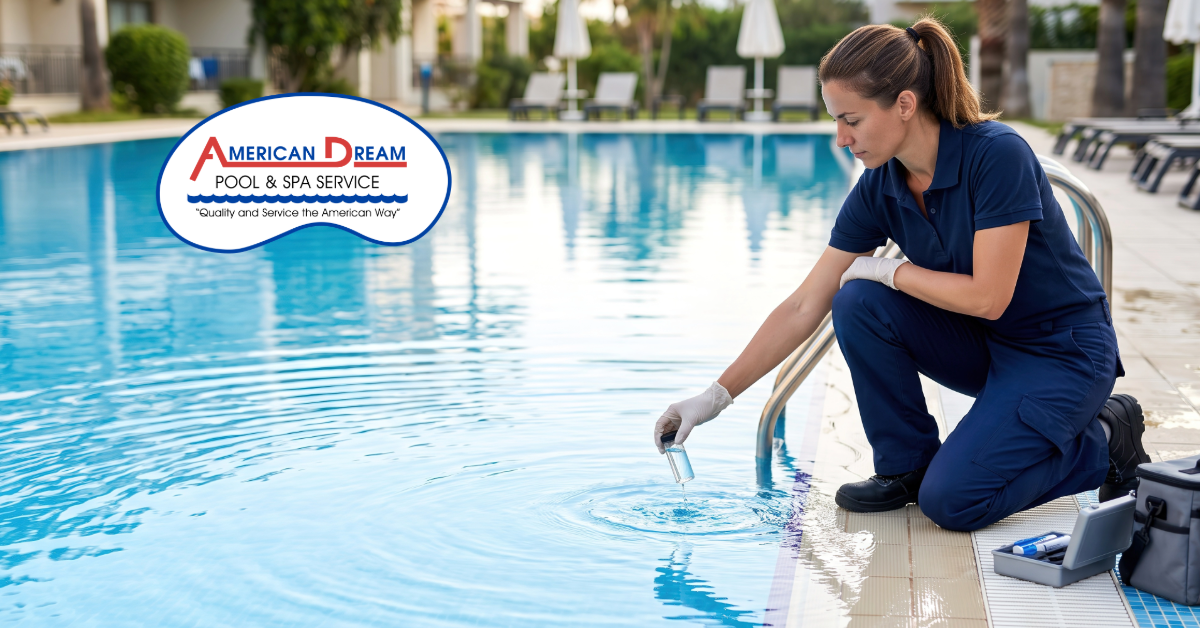
Test strips and liquid reagents don't last forever, and heat speeds up the clock. A garage or equipment pad in Lincoln or Roseville can easily sit above 100 degrees on a July afternoon. After a few months of that, a kit can give readings that look reasonable and are still off.
Moisture is the other problem. Once a bottle of strips is opened, humid air works on the pads every time the cap comes off. Leave it cracked open by the pool and they go downhill fast.
Check the expiration dates on your strips and reagent bottles. Most manufacturers recommend replacing reagents about once a year, and if a reagent has changed color in the bottle, it's done. Store your kit inside the house, somewhere cool and dark, not next to the pump.
Strips, Drop Kits, and Store Testers Don't Measure the Same Way
Test strips are quick, but you're matching a color pad to a chart by eye. Lighting changes what you see, and so does timing. Read it too early or too late and the color shifts. A strip is fine for a quick check. It isn't precise.
Drop kits are more accurate for most readings because you're counting drops until the sample changes color, not guessing between two shades of pink. That matters most for alkalinity, calcium hardness, and chlorine.
Most pool stores use a digital reader. When it's maintained and calibrated, it's a good tool. But it can only test the water you hand over, which brings us to the part that trips people up the most.
The Sample Itself Might Be the Problem
Where you take the sample matters. Water right next to a return jet, the skimmer, or a floating chlorine feeder won't represent the rest of the pool. Reach down about elbow deep, away from those spots, and fill the bottle underwater.
Use a clean bottle rinsed with pool water. An old drink bottle with residue in it can throw off the results before you leave the house.
Then there's the drive. Chlorine keeps breaking down inside a sealed bottle, and it breaks down faster when the bottle is warm. If you're heading into town from Sheridan or Penryn on a hot afternoon with the sample riding on the passenger seat, the chlorine number at the counter can come in lower than what's actually in your pool. Get the sample tested as soon as you can, ideally within an hour, and keep it out of the sun.
High Chlorine Can Fool the Test
This one catches a lot of people right after they shock. When chlorine is very high, it can bleach the color out of a standard chlorine test. The sample looks pale or clear, the reading looks low, and the natural move is to add more chlorine. That's the opposite of what the pool needs.
Very high chlorine can also push a pH test to read higher than it really is. If you just shocked, give it time to come back down before you trust either number.
It also helps to know whether your test shows free chlorine or total chlorine. Some basic kits only measure total, which includes chlorine that's already been used up. That's how a pool can smell like chlorine and still not have enough of it.
Stabilizer Is the Hardest Reading to Get Right
Cyanuric acid, also called stabilizer, is usually tested by adding a reagent that turns the sample cloudy, then judging when a black dot at the bottom of the tube disappears. It's more of a judgment call than other tests, and two people can read the same sample differently.
It also gets unreliable at higher levels. Once stabilizer climbs past about 100 ppm, a standard test can't read it accurately. A common workaround is mixing the sample half and half with tap water, testing that, and doubling the result.
After a summer of evaporation and stabilized chlorine tablets, a lot of pools carry more stabilizer than their owners realize. Since stabilizer controls how well your chlorine works, a bad reading here throws everything else off. We covered that in detail in why your chlorine isn't working anymore.
What Your Water Source Adds to the Picture
If you're on well water in Loomis, Penryn, or Sheridan, a standard test strip won't tell you anything about iron, manganese, or other metals. Your pool can read balanced on every pad and still stain the first time you shock it. Dissolved metals can also tint a sample and interfere with color-based tests. Testing for metals a few times a year is worth it, and so is watching for the early signs of pool stains.
On city water in Rocklin and Granite Bay, the issue after summer is usually buildup. Every top-off adds minerals, and evaporation leaves them behind. By September, calcium hardness can sit well above where it started in spring. The hardness pad on a strip covers a wide range, so a drop test gives you a much more useful number. If your plaster already feels rough like sandpaper, that number is worth knowing.
How to Get a Reading You Can Trust
A few habits clear up most of the confusion:
Replace strips and reagents every spring and store them indoors.
Take your sample elbow deep, away from returns, skimmers, and chlorine feeders.
Read strips in daylight and at the exact time listed on the bottle.
If two results disagree, test the same sample at home and at the store on the same trip.
Don't add chemicals based on one strange reading. Retest first.
Chemicals are expensive. Fixing an overcorrection is more expensive. Five extra minutes of retesting is cheap.
When It Makes Sense to Hand Off the Testing
If you're chasing numbers every week, or the water stays cloudy or green while your tests say everything looks fine, the problem may not be chemistry at all. Dirty filters, poor circulation, and worn equipment can all cause water problems that no amount of chemicals will fix. That's a pool repair conversation.
For a lot of owners, the easier answer is regular pool service. When the same technician tests your water on site with the same equipment every visit, you get consistent numbers and can see real trends instead of guessing from one reading to the next.
Hot tubs deserve the same attention, maybe more. A spa holds a fraction of the water a pool does, so readings swing fast, and high calcium can build scale on a spa heater before you notice anything is wrong. Routine spa service keeps that in check, and if your heater is already struggling, our spa repair team can take a look.
If your numbers never seem to line up, reach out to us. We work with pool and spa owners across Lincoln, Rocklin, Roseville, Granite Bay, Loomis, Penryn, and Sheridan, and we're happy to help you figure out what your water is actually doing.